The choice of sports equipment is not just a matter of budget or brand. Ill-fitting or technically unsuitable gear degrades biomechanics, increases the risk of injury, and limits progress. Here, we detail the technical criteria that truly make a difference on the field.
Competition Shoe Regulations: Thickness Thresholds to Know
As of April 1, 2026, the rules regarding the thickness of competition soles in athletics have been tightened. The limit is set at 20 mm on track and 40 mm on road. Cross-country, however, no longer imposes a thickness limit.
Compliance checks have also evolved: shoe verification is now conducted not only at the entrance to the call room but also after the event. In practice, an athlete can be disqualified retroactively if their shoes do not meet the standards. This point changes the equipment strategy in competition.
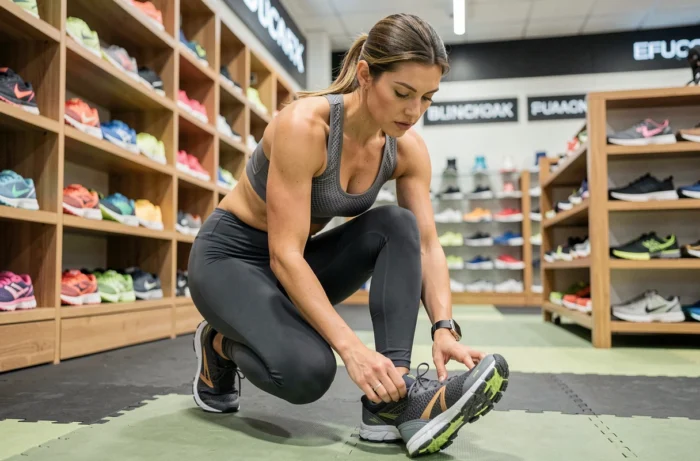
For regular practitioners outside of competition, these thresholds remain a useful reference. A sole that is too thick on the track alters foot strike and differently engages the posterior muscle chain. We recommend choosing shoes based on the dominant training surface, not just the comfort felt in-store.
To delve deeper into the topic, sports equipment on Sport et Form covers a wide range of disciplines and selection criteria tailored to each level of practice.
Integrated Sensors and Biomechanical Analysis: What Connected Equipment Changes
The sports equipment market is increasingly segmenting around so-called “smart” products. Sensors integrated directly into soles, textiles, or accessories measure performance in real-time: stride cadence, support asymmetry, power output, ground contact time.
Real-time biomechanical analysis allows for correcting a movement before it leads to an injury. A pressure sensor, for example, detects overpronation that the practitioner does not subjectively perceive. This type of data guides the choice of shoe much more precisely than a simple in-store test.
AI embedded in certain wearable devices goes further: it compares collected data to reference biomechanical models and suggests personalized adjustments. We observe that this category of connected tools surpasses simple heart rate monitoring to become a true lever for technical optimization.
Criteria for Selecting Connected Equipment
- The precision of the sensor takes precedence over the number of metrics displayed. A poorly calibrated accelerometer produces unusable data, regardless of the associated dashboard
- Compatibility with your existing ecosystem (watch, app, training platform) conditions actual usage over time
- Battery life and moisture resistance determine reliability in intensive or outdoor training conditions
AI Personalization and Custom Manufacturing: A Paradigm Shift
Personalization is gaining ground in the choice of sports equipment. Tools based on artificial intelligence analyze morphology, stride type, or posture to recommend equipment tailored to the millimeter. Custom manufacturing reduces compromises between comfort and performance.
This is not a gimmick. A personalized fit alters the distribution of plantar pressures, which directly impacts propulsion efficiency and muscle fatigue over long distances. Practitioners suffering from recurring pathologies (plantar fasciitis, shin splints) find measurable benefits.
However, we recommend distinguishing real personalization (3D foot scanning, dynamic analysis) from a simple online questionnaire that directs to a standard model. The level of personalization should be proportional to the investment and training volume.
Sports Shoes: Technical Mistakes That Limit Progress
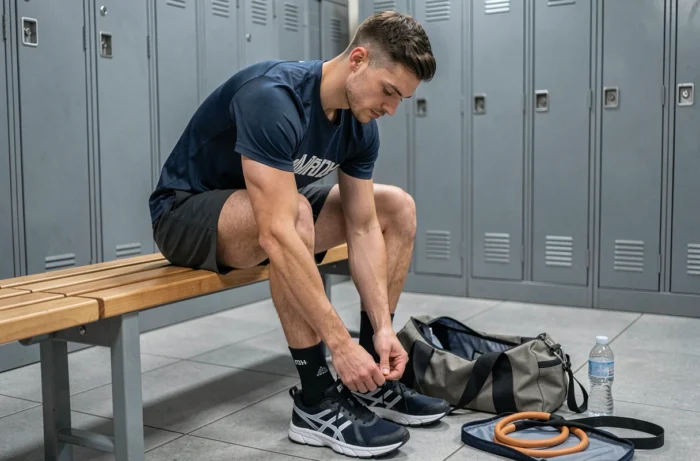
The choice of shoe concentrates the majority of equipment errors. Three technical points are consistently underestimated.
- The drop (the difference in height between heel and forefoot) influences the ground attack angle. A high drop favors heel striking, while a low drop engages the calf and Achilles tendon more. Abruptly changing drop without transition causes injuries
- The stiffness of the carbon plate, present in competition models, improves energy return but requires a sufficiently fast stride to take advantage of it. Below a certain pace, it becomes counterproductive
- The width of the fit is rarely tested correctly. A foot that slides laterally in the shoe loses stability and compensates with unnecessary muscle contractions that accelerate fatigue
Before investing in a high-end model, we recommend having your stride analyzed on an instrumented treadmill. A fit adapted to individual biomechanics consistently outperforms a poorly adjusted premium model.
Safety Standards and Protective Equipment: Reading Labels
Protective equipment (helmets, shin guards, knee pads) meets specific standards. The CE marking indicates compliance with European requirements, but not all certifications are equal depending on the discipline practiced.
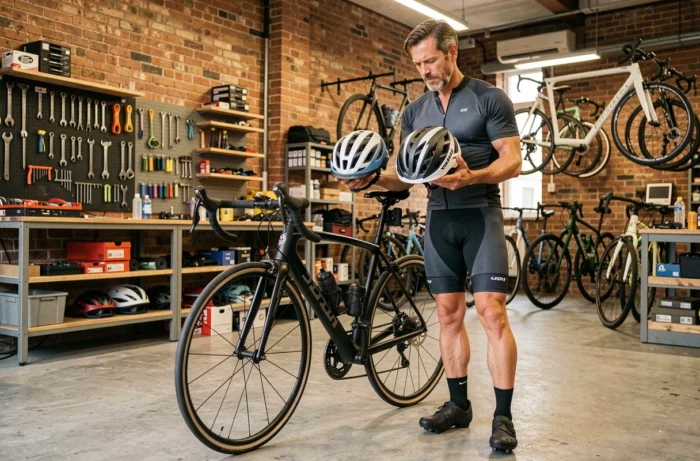
A bike helmet certified for road use does not protect in the same way as a mountain bike enduro helmet. The standard must correspond to actual practice, not the generic category of the sport. A football shin guard approved for futsal does not offer the same coverage in an outdoor match on synthetic turf.
Checking the marking takes only a few seconds and prevents investing in equipment that does not fulfill its primary function. Standards evolve regularly, and protective equipment purchased several years ago may no longer meet current standards.
Appropriate sports equipment is neither the most expensive nor the most technological. It is the one that corresponds to the practitioner’s biomechanics, the regulatory constraints of their discipline, and the actual volume of their training. Testing, measuring, adjusting: this sequence remains the best investment before any purchase.