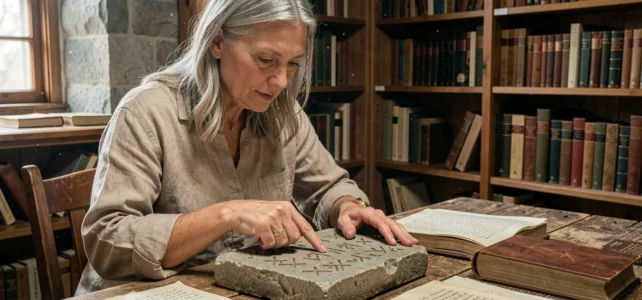
When you draw a rune on the Bourzeix site and land on Yr, the text speaks of danger to overcome and self-reflection. The wording is brief, sometimes cryptic. For someone discovering runes through this medium, the gap between the displayed symbol and its concrete interpretation can be disorienting. Understanding where these signs come from and how they function changes the way one approaches each draw.
Bourzeix Runes and Old Futhark: What the Site Doesn’t Detail
The Bourzeix site offers an online oracle based on runes. You click, a symbol appears with a short paragraph oriented towards advice (danger, opportunity, patience). The format is deliberately concise, which is suitable for a quick consultation.
See also : Marie Bastide: career, relationship, and secrets of the singer with Calogero
What the site does not specify is the historical foundation behind each glyph. The runes used derive from the Old Futhark, an alphabet of 24 signs developed by the Germanic peoples. The oldest confirmed inscriptions date back at least to the year 150, well before the Viking Age in the strict sense. Thus, we are faced with a system that has traversed several centuries and cultures before arriving in a web browser.
For those who want to go beyond the message displayed on the screen, you can read the meaning of the Bourzeix runes with insights into their symbolic and divinatory significance.
See also : Highlights of the Moments Between Beth and Rio in the Series Good Girls
The exact origin of the runes is still the subject of competing hypotheses among specialists. Some works link them to a Germanic adaptation influenced by Mediterranean alphabets (Latin, Etruscan), while others mention a Celtic influence. This uncertainty does not detract from their use: it simply reminds us that runes do not belong to a single fixed tradition.
Double Function of Runes: Phonetic Alphabet and Divinatory Symbol
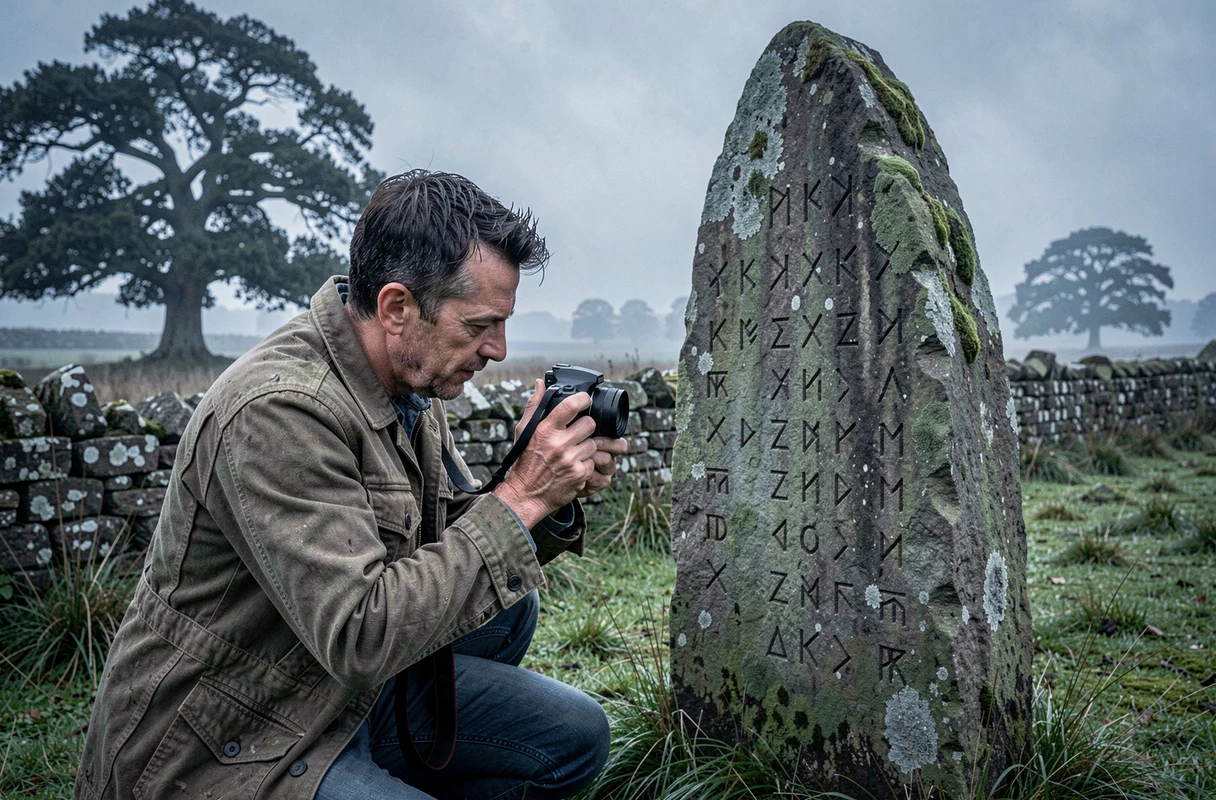
A point often misunderstood when starting with Bourzeix runes: each sign has two dimensions. The first is phonetic. Fehu corresponds to one sound (the F), Laguz to another (the L). The Germanic and Nordic peoples carved these characters into stone, wood, or metal to write names, dedications, and formulas.
The second dimension is symbolic. Fehu represents not only a sound but also wealth, cattle, and material prosperity. Laguz evokes water, intuition, and flow. It is this layer of meaning that the Bourzeix site exploits in its draws.
Each rune carries both a sound value and a symbolic charge. When drawing Fehu in a divinatory context, you do not read the letter F: you question what prosperity, gain, or loss means in the given situation. This dual reading explains why modern interpretation blends alphabet, mental imagery, and personal context.
Some Common Runes and Their Symbolic Register
- Fehu (ᚠ): material wealth, abundance, but also a warning about attachment to possessions
- Laguz (ᛚ): water, intuition, inner movement, the ability to go with the flow rather than force
- Ansuz (ᚨ): communication, transmitted wisdom, connection with speech and knowledge (associated with Odin in Nordic tradition)
- Thurisaz (ᚦ): protection, brute strength, an obstacle to overcome before moving forward
The Bourzeix site condenses these registers into a few lines. For a more nuanced draw, it is beneficial to know the complete symbolic field of each sign.
Rune Drawing: Position, Interaction, and Reading Context
On the Bourzeix site, the drawing is generally done rune by rune. You obtain a symbol, a message. This is the simplest format, suitable for a closed question or a momentary impulse.
In more developed runic practice, the position of the rune and its neighbors radically alters the message. A three-rune draw (past, present, future) or a five-rune cross creates interactions. Fehu drawn alone suggests prosperity. Fehu followed by Hagalaz (break, storm) in the “future” position significantly nuances the statement.
Modern interpretation increasingly emphasizes these interactions between runes rather than the isolated reading of each sign. Meaning does not come from a symbol taken alone, but from the combination with the posed question, the position in the draw, and the adjacent runes.
Reversed Rune: A Modern Convention, Not a Historical Rule
Some practitioners read a rune “upside down” as carrying an opposite or weakened meaning. This convention is not attested in medieval sources. It developed in the 20th century, by analogy with tarot. It is a methodological choice, not a dogma. Feedback varies on this point: some find that the reversed rune adds nuance, while others believe that each symbol already contains its positive and negative polarities.
Birth Rune and Runic Calendar: Recent Construction
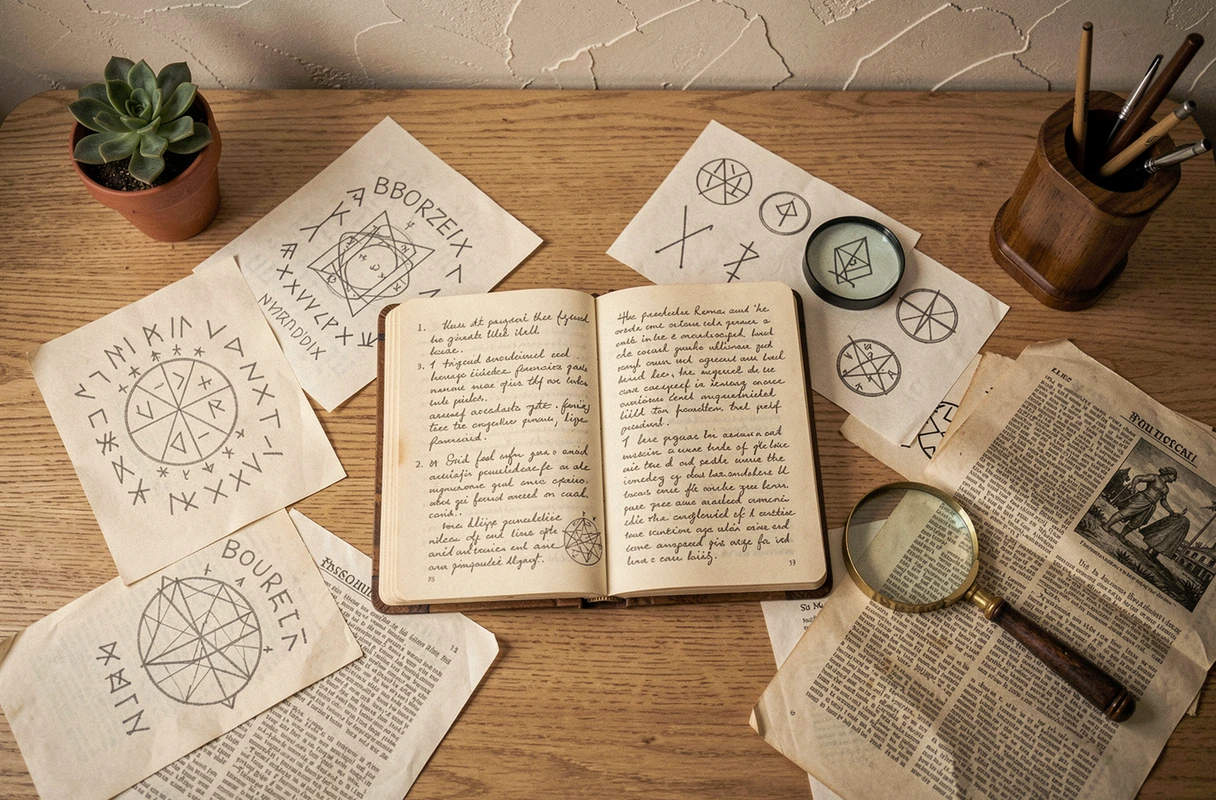
On several sites, including within the Bourzeix sphere, there is the idea of a “birth rune” assigned according to the date of birth, similar to an astrological sign. This approach is appealing because it provides a personal symbol, an identity anchor.
It should be noted that the runic calendar is a contemporary esoteric construction. No medieval or archaeological source links a rune to a birth period. The peoples who used the Old Futhark left no trace of such a calendrical system applied to individuals.
This observation does not disqualify the approach. Tarot also did not exist in its current divinatory form in the Middle Ages. Usage evolves. But keeping this distinction in mind prevents attributing to the runes an antiquity they do not have on this specific point.
Reading Bourzeix Runes with an Informed Perspective
The Bourzeix site remains an accessible entry point to discover runes without prior training. Its short and direct format has the merit of simplicity. To go further, knowing the Old Futhark, the dual phonetic and symbolic function of each sign, and the limits of modern conventions (reversed rune, birth rune) allows for deeper insights from each consultation.
The richness of the runes lies precisely in their plasticity: the same symbol addresses differently depending on the question, the moment, and the drawing method. It is this flexibility that keeps the system alive, far beyond an online oracle.