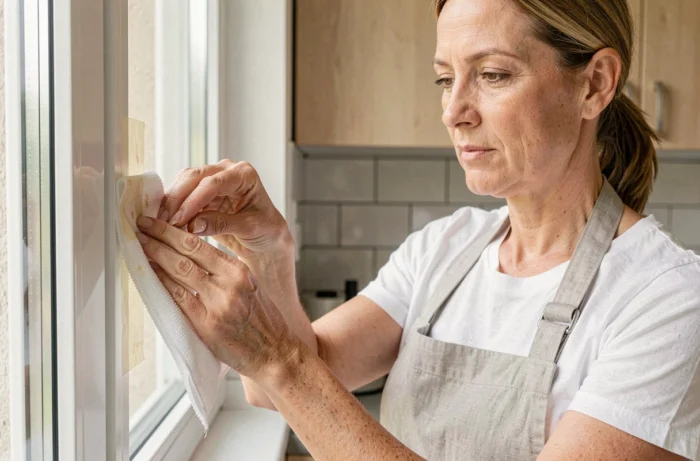
A construction tape left for several months on a PVC window frame, a packing tape stuck on a door threshold during a move: when the adhesive is finally removed, the glue remains. The surface becomes sticky, grayish, and attracts dust. Removing tape residue from PVC requires a method suited to this material, as a wrong reflex can leave a permanent haze or visible micro-scratches in bright light.
Heat and plastic scraper before any chemical product
On an old and hardened tape residue, the first reflex to avoid is to whip out a solvent. Start by softening the glue with moderate heat, between 40 and 60 °C, using a hairdryer held about fifteen centimeters from the surface. The adhesive becomes flexible in a few seconds.
Then scrape with a rigid plastic card (like an expired bank card) or a plastic scraper. The motion should be flat, pushing the glue in front of you, never scraping perpendicularly. This heat-scraper duo removes most of the residue without any risk to the PVC.
For those who want to remove tape marks from PVC with Votre Déco, this mechanical step remains the recommended starting point before considering a chemical treatment.
When the tape is recent (less than a few weeks), heat is not even necessary. Slowly pull the adhesive at a low angle, and wipe the area with a slightly damp microfiber cloth. The residue usually comes off effortlessly.
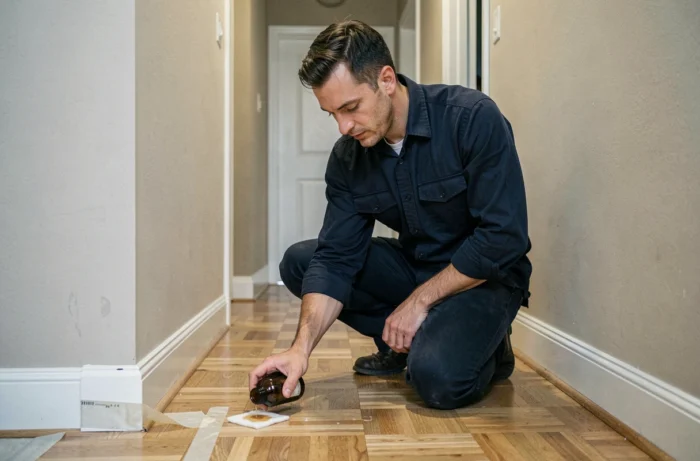
Isopropyl alcohol, oil, or vinegar: which solvent for which residue on PVC
When the scraper is not enough, a stubborn sticky film remains. The choice of product depends on the condition of the residue and the type of PVC (smooth, textured, colored throughout, or lacquered).
Isopropyl alcohol on smooth PVC
This is the most reliable product for dissolving a rubber-based adhesive on a non-porous surface. Soak a soft cloth, apply it to the area for about thirty seconds, then rub in light circles. Isopropyl alcohol evaporates quickly and leaves no greasy film.
On textured PVC (wood grain imitation, for example), feedback varies on this point: some users find that the alcohol does not penetrate enough into the micro-reliefs. A second pass with a cotton swab soaked allows treating the depressions one by one.
Cooking oil for fine residues
Sunflower oil, olive oil, it doesn’t matter: the fatty substance breaks down the adhesive through saturation. Place a few drops on the residue, let it sit for two to three minutes, then wipe with a clean cloth. This method works well on recent packing tape marks.
The downside: the oil itself leaves a greasy film that must be cleaned afterward with warm soapy water. On a window frame exposed to dust, skipping this step means replacing one problem with another.
Warmed white vinegar
Diluted in a bit of hot water, white vinegar acts on moderately embedded glue residues. Apply with a cloth, let sit for a minute, then rub. The low acidity of vinegar poses no risk to PVC, even colored. Less effective than alcohol on old glues, it remains a good first attempt when nothing else is on hand.
Acetone on PVC: the classic construction trap
Acetone does dissolve the glue. The problem is that it also partially dissolves the surface of the PVC. The result: a dull whitish haze, irreversible on dark PVC, and micro-scratches that permanently attract dirt.
This feedback is regularly found on DIY forums, especially after construction ends where acetone was used to speed up work on new woodwork. The PVC profile loses its smooth appearance, and no polish can completely restore the damage.
The rule is simple: never use acetone on PVC, nor nail polish remover that contains it. The same goes for white spirit, which can dull certain white PVCs over time.
If unsure about a product’s compatibility, test it on a hidden area (bottom edge of the frame, inner face of a profile). Wait a few minutes and check that the surface has not changed in appearance.
Final cleaning of PVC after glue removal
Once the tape residue has been removed, the surface of the PVC has been in contact with a solvent or fatty substance. A finishing clean protects the material and prepares the surface if a seal or adhesive needs to be reapplied later.
- Wipe a cloth soaked in warm water with a neutral detergent (regular dish soap) over the entire treated area, slightly overlapping around
- Rinse with clear water using a second cloth to remove any soap or solvent residue
- Dry with a clean microfiber cloth to avoid water marks on smooth PVC
This step may seem trivial, but recent technical guides emphasize one point: a residual film of solvent or oil disrupts the adhesion of sealants and joints applied later. If cleaning a PVC window frame before redoing a silicone joint, thorough rinsing conditions the hold of the new joint.
What tools to never use on PVC
Just as the choice of product, the choice of tool determines whether the surface will remain intact.
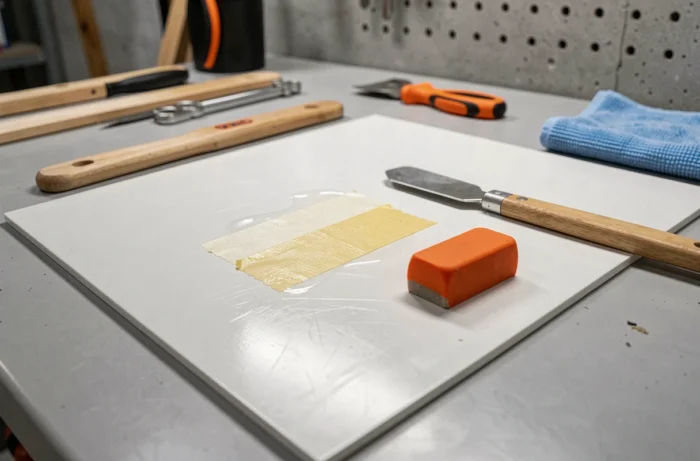
- Metal scraper or cutter blade: scratches the PVC irreversibly, even when done gently
- Abrasive sponge (green side): creates a network of micro-scratches that dull the surface in just a few passes
- Steel wool or iron filings: to be completely avoided, including the fine version known as “triple zero”
- Magic eraser (melamine): effective on black marks but slightly abrasive, to be reserved for textured PVC and tested first in a discreet area
A flexible plastic scraper and a microfiber cloth cover almost all situations. Patience matters more than force: several light passes yield better results than a single hard scrape.
PVC forgives many things, as long as you don’t force it. A tape residue, even one several years old, will always give way to the right combination of heat-scraper-gentle solvent. The only truly costly mistake is starting with the most aggressive product.