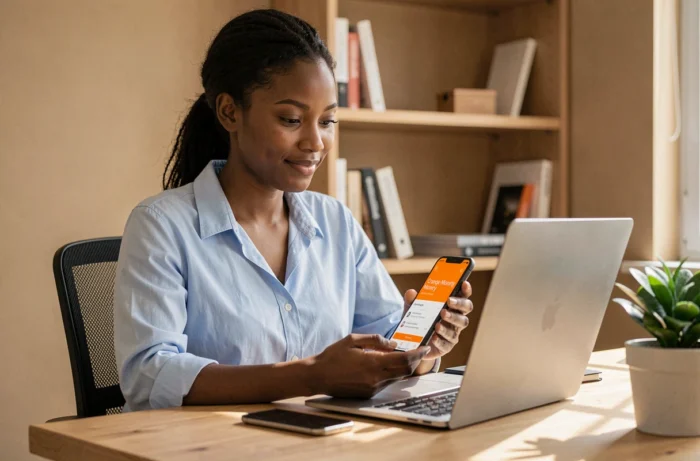
Receiving a payment on your phone just minutes after completing an online task: this is the daily reality for many connected workers in West Africa. Orange Money has become much more than a tool for transferring money between friends. It now serves as a payment infrastructure for micro-tasking platforms, online sales, and digital services.
Orange Money as a Professional Payment Channel in West Africa
Most guides on the subject present Orange Money as a simple mobile wallet. The reality has changed. In recent years, reports from GSMA and BCEAO have documented a marked increase in the use of mobile money for payments related to recurring economic activities: e-commerce, service provision, micro-tasking.
Orange Money is one of the main channels used by platforms to pay users in the UEMOA zone. It is no longer a one-time transfer between individuals; it is a payment infrastructure for structured activities.
Specifically, a provider who writes texts, moderates content, or conducts surveys can receive their payment directly into their Orange Money account, without going through a bank account. For those discovering paid online work via Orange Money, this option removes the banking barrier that blocked access to many digital opportunities.
Interoperability is also progressing in the UEMOA zone: instant payment systems now allow funds to be received from other mobile wallets and then consolidated into Orange Money. This expands the number of compatible platforms.
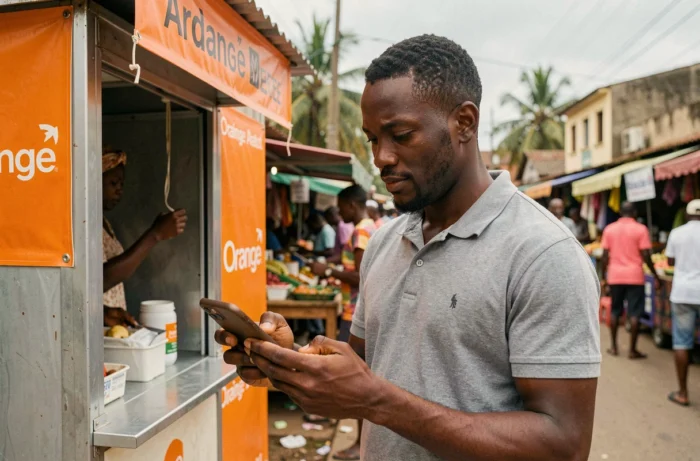
Concrete Online Activities That Pay via Mobile Money
Are you wondering which tasks actually allow you to receive money on Orange Money? Here are the categories that work, along with their specifics.
Paid Surveys and Micro-Tasks
Apps like SagaPoll offer the opportunity to respond to surveys from your phone. The payment per survey remains modest, but the withdrawal is done directly to Orange Money. The earnings depend on the volume of surveys available in your country.
Micro-tasking platforms (image tagging, audio transcription, data verification) operate on the same principle. They pay per task, often in small cumulative amounts.
Online Sales of Products and Services
Creating an online store and receiving payments via Orange Money has become accessible thanks to payment gateways tailored to the African market. Solutions like Sene-Pay or local integrators allow you to connect a website or sales page to mobile payment.
- Selling handmade or second-hand products on social media, with Orange Money payment upon delivery or in advance
- Providing digital services (design, writing, translation) billed to local or regional clients
- Affiliate marketing: recommending products and earning a commission paid via mobile money by certain partner platforms
Freelancing on International Platforms
Websites like Upwork or Fiverr generally pay via Payoneer or bank transfer. The bridge to Orange Money goes through a transfer from Payoneer to a local account, followed by a withdrawal to mobile money. This is not a direct payment, but the chain works.
Some African platforms, however, integrate Orange Money natively. They target French-speaking freelancers for writing, moderation, or customer support tasks.
Fees and Transaction Limits: What Reduces Your Earnings
Earning money online is one thing. Keeping most of your earnings is another. Withdrawal and transfer fees vary by country and amount.
For an online worker receiving several small payments per month, these fees accumulate.
- Check the merchant payment receipt fees, not just the cash withdrawal fees
- Compare the fee schedules between Orange Money and Wave in your country before choosing your main channel
- Consolidate your withdrawals to limit the number of charged transactions
- Monitor daily and monthly transaction limits, which vary according to your KYC verification level
A freelancer receiving multiple payments per week should know their operator’s fee schedule precisely. A few percentage points on each transaction can weigh heavily on net income.

Common Pitfalls and Precautions Before Getting Started
The first pitfall is confusing paid activity with promises of easy earnings. Any platform that requires an initial investment to “unlock” income is suspicious. Legitimate activities pay for work done, not after a prior deposit.
The second concerns regularity. Responding to surveys or completing micro-tasks generates supplemental income, rarely a primary income. Earnings become significant when you develop a sellable skill (writing, translation, design) and access better-paying assignments.
The third pitfall is technical. An unverified Orange Money account (without validated ID) imposes low limits. Before seeking assignments, complete your KYC verification to avoid fund blocks.
Mobile money transforms access to digital work for millions of people who do not have a bank account. The key remains to treat this activity as a real job: choosing your platforms, calculating your fees, and improving your skills. The payment channel is there; it is the regularity of work that makes the difference.