Screen-free creative hobbies, local getaways, omnipresent streaming: the entertainment habits of the French in 2026 paint a contrasting picture. What types of leisure activities offer the best balance between daily escape and budget or time constraints? Rather than listing dozens of ideas, this article compares the major categories of activities based on their accessibility, cost, and actual ability to disconnect from daily life.
Screen-free leisure vs. digital leisure: what usage reveals
Screen time during leisure remains very high in 2026, with streaming and social media taking a dominant position. At the same time, manual activities, journaling, scrapbooking, and analog creative hobbies are clearly on the rise, especially among younger generations who are returning to what they can create with their hands.
| Type of leisure | Entry cost | Time required | Actual disconnection |
|---|---|---|---|
| Streaming / social media | Monthly subscription | Flexible (a few minutes to several hours) | Low |
| Creative hobbies (crochet, embroidery, scrapbooking) | Affordable basic materials | Sessions of 30 min to 2 h | High |
| Board games / escape rooms | One-time purchase or session fee | 1 to 2 h per game | High |
| Organized sports (club, workshop) | Annual membership (Sport pass: 50 euros in 2026-2027) | Fixed time slots | High |
| Local cultural outings | Variable (free to moderate) | Half a day | Moderate to high |
This table highlights a clear gap: screen-free leisure offers a much greater disconnection, but requires a more structured time commitment. Streaming remains the default choice due to its flexibility, not necessarily out of preference.
To explore various activities near you, you can access the leisure page of HyperScoop and filter by category according to your desires.

Creative and manual activities: why the return to the tangible is appealing
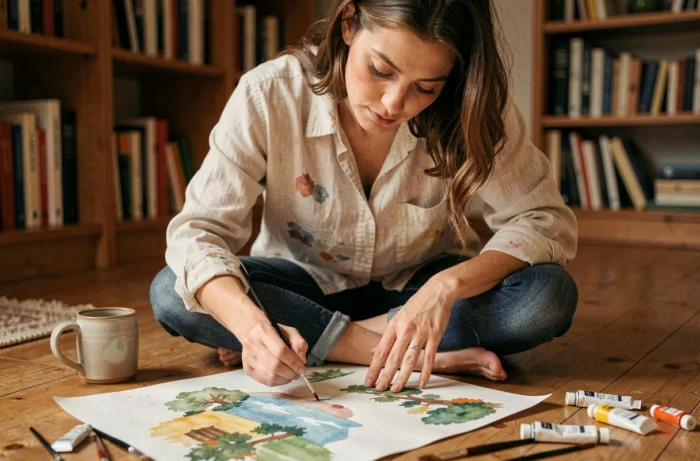
Embroidery, crochet, watercolor, pottery: these activities are no longer confined to a niche audience. Several trend analyses published in September 2026 confirm that younger generations are even earning income from these practices, transforming a hobby into a micro-economic activity.
What distinguishes these hobbies is their sensory dimension. Working with a material using one’s hands engages attention in a way that passive scrolling does not allow. Journaling and scrapbooking operate on the same principle: producing something tangible generates a measurable sense of accomplishment.
The main barrier remains the first step
Buying materials without knowing if the activity will be enjoyable represents a perceived risk. In-person introductory workshops (ceramics, sewing, drawing) allow for testing without heavy investment. For families, these creative workshops advantageously replace a traditional outing to the cinema for a comparable budget.
Board games and escape rooms: collective leisure activities on the rise
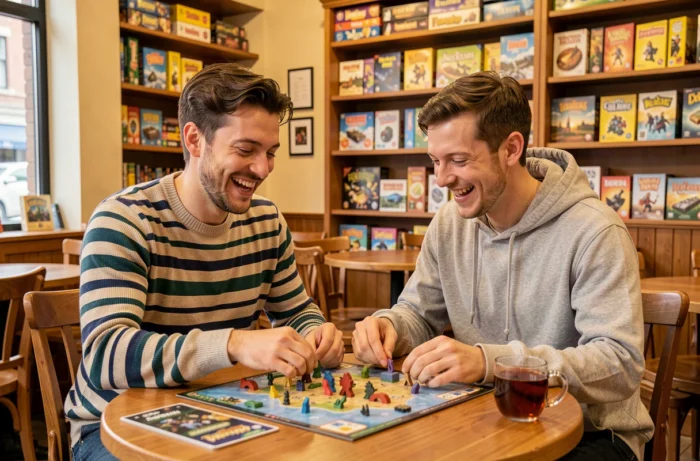
Board games are experiencing a resurgence of interest that goes beyond the family setting. Quiz nights with friends, escape rooms at home or in venues, narrative role-playing games: collective in-person leisure meets a social connection need that digital options do not fulfill.
- Escape rooms offer sessions of about one hour, with regularly updated scenarios, for a per-person fee that remains accessible in groups
- Modern board games (cooperative, narrative, investigative) offer high replayability for a one-time purchase
- Quiz nights or blind tests organized at home cost nothing and adapt to all ages
However, these activities require coordinating the schedules of several people, which explains why they remain less frequent than individual leisure activities.
Everyday sports: the Sport pass and accessible alternatives
The Sport pass is renewed for the 2026-2027 season, but its amount has been reduced to 50 euros, compared to a higher amount in previous years. This aid targets young people and facilitates access to sports clubs and associations.
For adults, the trend is towards independent and low-cost practices. Walking, running, and home yoga require almost no equipment. The sports gaining popularity in 2026 often combine a social dimension (padel, informal team sports) with broad time accessibility.
Proximity and last-minute booking: the new reflex
The French are reorganizing their leisure activities by prioritizing proximity, shorter trips, and later bookings. This behavior, documented by ADN Tourisme, also applies to weekend sports: people prefer an activity within an hour of home rather than a long journey.
Local cultural outings: an underestimated escape lever
Visiting a local museum, attending an outdoor performance, participating in a public reading: these outings require little planning and offer a clear break from daily life. The tight budgets of 2026, marked by rising prices in several areas of everyday expenses, enhance the appeal of free or low-cost activities.
- Many museums offer free or reduced-rate slots on certain days of the week
- Local festivals and outdoor events are multiplying, with free entry or low-cost options
- Libraries and media libraries remain underutilized free leisure spaces (books, games, workshops)
Local culture works even better when combined with other leisure activities: a walk followed by a visit, a picnic before an outdoor concert. Daily escape relies less on the type of activity than on the break from routine it provokes.
Ultimately, the choice of a regular leisure activity depends on three variables: available budget, actual free time, and need for disconnection. Data from 2026 shows that the French are increasingly opting for nearby, tangible, and shared activities, even if the screen remains the simplest fallback when time is short.