Organizing a festive wedding is not just about stacking activities between two courses. The choice of entertainment depends on the venue, the profile of the guests, the rhythm of the day, and sometimes underestimated constraints, such as regulations surrounding certain pyrotechnic effects. Before diving into a list of ideas, a few realities need to be established.
Wedding Fireworks: An Entertainment Under Regulatory Constraints
Fireworks remain one of the most requested forms of entertainment to conclude a wedding evening. Competing articles present it as a romantic moment to add to the program. The logistical reality is more complex.
Setting off fireworks at a wedding requires a prior declaration to the prefecture, a defined safety perimeter, and, in most cases, dedicated insurance taken out by the organizer or the service provider. During periods of drought or fire vigilance, prefectures can prohibit the use of fireworks across an entire department, sometimes just days before the scheduled date.
Planning this entertainment therefore means starting several months in advance, checking the current prefectural decrees, and having a credible backup plan. A couple who discovers the ban the day before the wedding finds themselves without a closing show and with a committed budget that is difficult to recover. Feedback from the field varies on this point: some providers offer alternatives (LED shows, light drones), while others only refund part of the costs.
Interactive Entertainment Led by the DJ: A Format That Changes the Evening
The role of the wedding DJ has significantly evolved. Beyond the playlist and the dance floor, many providers now offer short animation sequences integrated into the meal flow: quizzes about the couple, table battles, timed dance challenges. These formats generally last between five and ten minutes, designed not to interrupt service.
This shift makes the DJ a true interactive master of ceremonies. For these moments to work, it is essential to discuss them in advance with the provider, share anecdotes about the couple, and define the desired number of sequences. Three to four short interventions throughout the evening are enough to maintain the atmosphere without overwhelming the guests. Among the animations offered on Mariage Univers, several formats rely on this principle of rhythmic interactivity.
A common pitfall: entrusting the animation to the DJ without prior briefing. Without personalized content, the games fall flat and resemble any corporate event.
Photobooth and Wedding Memories: What Distinguishes Useful Entertainment from a Gadget
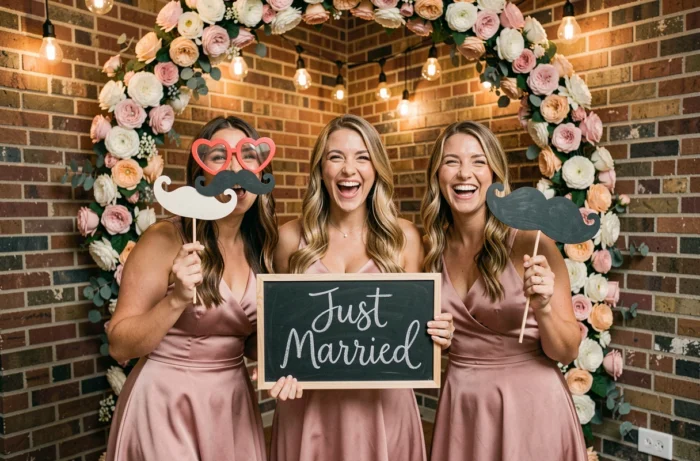
The photobooth is one of the classics. Its presence in almost every wedding for the past decade raises a simple question: how to prevent this entertainment from becoming a decorative piece that no one uses after the first hour?
Some concrete criteria separate a functioning photobooth from a useless investment:
- The location in the reception hall is as important as the equipment. A photobooth placed in a hallway or near the exit will be underutilized. Close to the dance floor or the bar, it naturally captures the flow of guests.
- Accessories should be renewed or themed. Identical cardboard glasses and mustaches to those at every wedding do not encourage guests to return.
- Immediate printing of photos remains the main usage factor. A photobooth that sends pictures via email without paper prints loses much of its appeal for guests.
- The possibility of sticking prints in a guestbook transforms the photobooth into a sustainable participatory entertainment, with messages written on the spot by the guests.
Rhythm of Entertainment During the Reception: How Many and When
The most common mistake is to multiply wedding animations without considering the actual flow of the day. Between the ceremony, the cocktail, the meal, the speeches, and the dance party, the available time for games or shows is more limited than one might imagine.
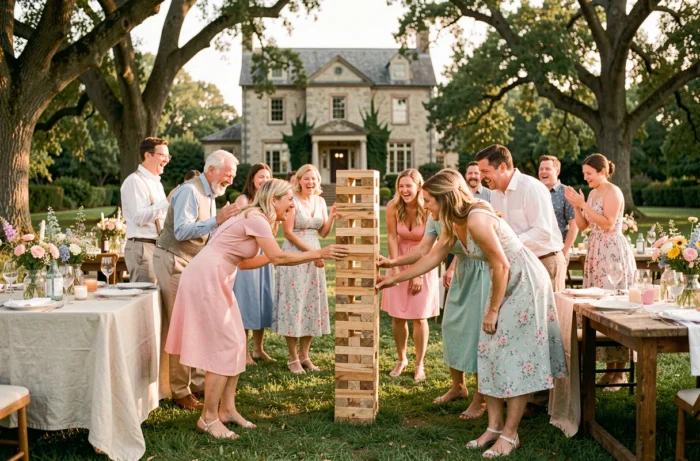
A pragmatic rule: plan a maximum of four animations spread throughout the day. The cocktail lends itself well to a light activity (icebreaker game, short creative workshop). The meal can accommodate one or two interactive sequences between courses. The evening, however, belongs to dancing and spontaneous moments.
- Cocktail: short animation that allows guests to mingle (famous couples game, photo challenge between tables).
- Meal: sequence led by the DJ or a retrospective video of the couple, placed between two courses to avoid disrupting service.
- Evening: open dance floor, possibly a visual show (drones, LED) if the budget and regulations allow.
Overloading the program turns the celebration into an obstacle course. Guests also need to chat, reconnect, and enjoy the venue. Weddings that guests remember most fondly are rarely those where every quarter-hour was filled with a directed activity.
The choice of entertainment reflects both the couple’s personality and the constraints of the venue and schedule. Checking the regulatory feasibility of pyrotechnic effects, briefing the DJ with personalized content, positioning the photobooth in the right place, and resisting the temptation to plan everything: these four points matter more than the length of the list of ideas.